
BATTERY FIRE
HAZARD ASSESSMENT
As high-capacity lithium-ion batteries become more integral to renewable energy integration and grid stability, the risks of thermal runaway and fire incidents pose serious safety concerns. These events can lead to catastrophic failures, endangering infrastructure, impacting air quality, and posing significant environmental and financial risks. This research area focuses on identifying the factors that contribute to battery fires and developing effective prevention and mitigation strategies to enhance the safety and reliability of large-scale energy storage systems.
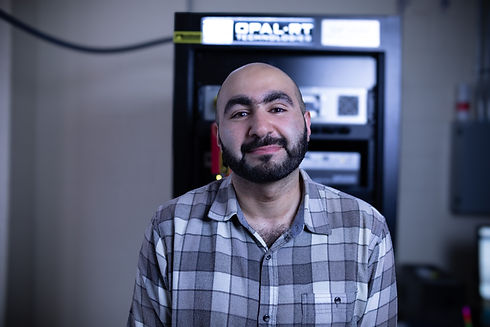

In recent years, the widespread adoption of lithium-ion batteries has brought fire safety concerns to the forefront, particularly as high-energy-density batteries become essential for electric vehicles, renewable energy storage, and various portable applications. The Headley Research Group is dedicated to advancing battery fire safety by investigating the thermal and chemical behaviors that lead to dangerous conditions such as thermal runaway. Through experimental studies and modeling, this research examines how various stressors, like overcharging, physical damage, and high discharge rates, affect battery safety.
Dr. Alexander Headley’s work includes exploring advanced battery management systems and safety protocols to mitigate the risks associated with battery failure. By developing predictive models and testing safety measures, this research informs industry standards and design improvements, helping to reduce fire risks and ensure greater safety in high-capacity applications. These efforts contribute significantly to the reliability and acceptance of energy storage systems in both consumer and industrial sectors, where safety remains a critical concern.